

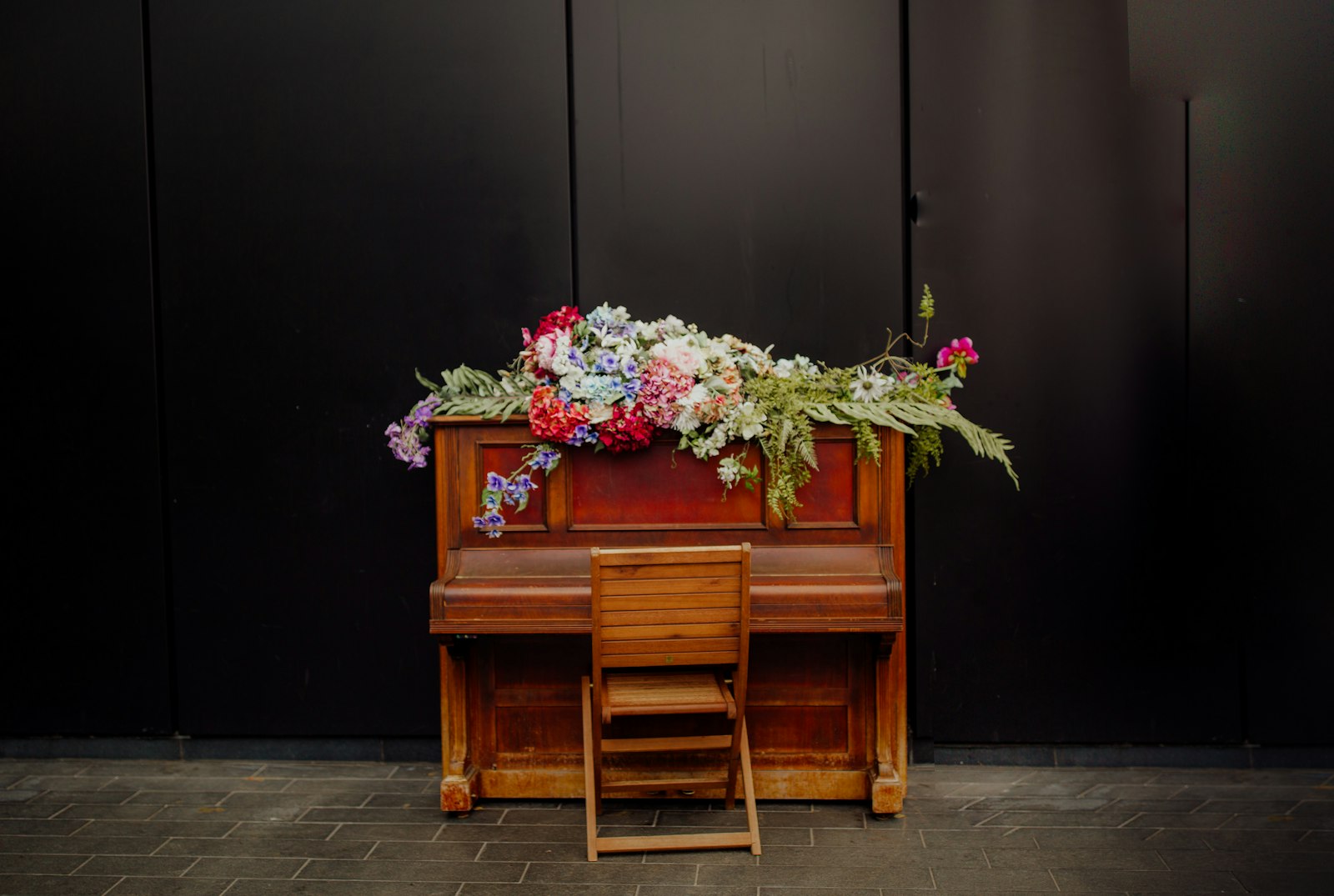
Funeral Music: Choosing Songs and Hymns
You're planning a service and you've hit the music question, which sounds simple until you actually have to pick. This guide on funeral music, songs, and hymns walks you through how to choose pieces that fit the person and the tone, which songs are traditional vs. contemporary, where in the service each kind of music typically goes, and how to handle live vs. recorded options. You'll also find sample playlists for different moods and religious traditions.
Music does a lot of the emotional work at a funeral. The right song can say what words can't. The wrong one — something too upbeat for the moment, or something you can tell no one actually liked — can jar an otherwise good service. Getting this choice right matters more than families sometimes realize.
Start With the Person, Not the Genre
The single best rule for picking funeral music is to start with the person who died, not with a list of funeral standards.
Ask yourself:
- What music did they actually listen to?
- What song always made them sing along?
- Was there a piece they asked to be played?
- What was on in the house, the car, the garden?
- Did they have a favorite hymn, or a church they loved?
A retired mechanic who cranked Creedence in the shop every Saturday would probably want "Who'll Stop the Rain" over "Ave Maria." A lifelong church organist deserves the hymn she played every Sunday for 40 years. The closer the music gets to the actual person, the more the room will feel it.
Here's the thing: you're not choosing music for the audience. You're choosing it for the person who's no longer in the room. If the music honors them, the audience will feel honored by extension.
Where Music Goes in a Typical Service
A traditional funeral or memorial service has 3 to 5 natural music slots. Knowing where they fall helps you pick pieces that match the moment.
1. Prelude (Before the Service)
As guests arrive and find seats, soft background music sets the tone. This can be instrumental or vocal, 10-20 minutes of music, played at a low volume. It doesn't get everyone's full attention — it signals the room that the service is about to begin.
Good prelude choices: instrumental hymns, classical pieces, quiet instrumental covers of songs the person loved, or a soft acoustic playlist.
2. Processional (Family Entry)
If the service includes a procession — the casket being brought in, or the family walking to the front — music plays during that minute or two. Pick something with dignity and a clear pulse so people can walk to it.
Good processional choices: "Amazing Grace" (bagpipes), Pachelbel's Canon, "How Great Thou Art," or a meaningful hymn from the person's tradition.
3. Within the Service (Reflection Songs)
Most services include 1 or 2 songs during the program, often after a reading or eulogy. These are the emotional centerpieces. The room's full attention is on the music.
Good in-service choices: a sung hymn the congregation knows, a solo vocalist, or a recorded song the person loved played in full.
4. Recessional (Closing and Exit)
As the family and guests leave, music plays them out. The mood here can shift — this is where an uplifting or upbeat song often works well, signaling the transition from grief to remembrance.
Good recessional choices: "When the Saints Go Marching In," "What a Wonderful World," "Here Comes the Sun," or the person's signature song.
5. Reception or Celebration of Life Playlist
If the service is followed by a reception or is a full celebration of life, you'll need a background playlist — typically 60-90 minutes of music that reflects the person's taste. This doesn't require formal selection; it's the soundtrack to conversation.
Traditional Hymns for Funeral Services
If the service is religious or you want something with a classical weight to it, traditional hymns are a safe and meaningful choice. Here are the most frequently chosen.
Christian Hymns (Most Denominations)
- Amazing Grace — the most requested funeral hymn in English-speaking countries
- How Great Thou Art — grand, uplifting, widely known
- The Lord Is My Shepherd (Crimond) — the Psalm 23 hymn
- On Eagle's Wings — popular in both Catholic and Protestant services
- Here I Am, Lord — contemporary hymn with strong emotional pull
- Be Thou My Vision — Irish hymn, quiet and reflective
- Abide With Me — traditional evening hymn, often used for funerals
- It Is Well With My Soul — deeply emotional, 19th-century hymn
- Great Is Thy Faithfulness — comforting, widely sung
- I'll Fly Away — upbeat, especially common in Southern Baptist and gospel services
Catholic-Specific
- Ave Maria (Schubert or Bach/Gounod) — sung or instrumental
- Pie Jesu (Faure or Lloyd Webber) — often a solo
- Panis Angelicus — communion hymn, often used at funerals
- Jesus Remember Me (Taize chant)
- Here I Am, Lord — widely used in American Catholic funerals
Jewish Tradition
- El Malei Rachamim — the traditional memorial prayer, chanted
- Oseh Shalom — closing prayer, often sung
- Psalm 23 — recited or sung
Hymns for Non-Religious Services
Even at secular services, certain pieces carry hymn-like weight without being explicitly religious:
- "The Parting Glass" (traditional Irish)
- "Danny Boy"
- "Auld Lang Syne"
- "Bridge Over Troubled Water" (Simon & Garfunkel)
Contemporary Funeral Songs
For celebrations of life and less traditional services, contemporary songs carry more emotional weight than hymns because they're tied to specific memories. Here are widely chosen pieces by mood.
Reflective and Emotional
- Somewhere Over the Rainbow — Israel Kamakawiwo'ole's version is now a funeral standard
- Tears in Heaven — Eric Clapton
- Hallelujah — Leonard Cohen, Jeff Buckley, or Pentatonix versions
- Time to Say Goodbye — Andrea Bocelli and Sarah Brightman
- You Raise Me Up — Josh Groban
- See You Again — Wiz Khalifa featuring Charlie Puth
- Supermarket Flowers — Ed Sheeran
- Fire and Rain — James Taylor
Celebratory and Uplifting
- What a Wonderful World — Louis Armstrong
- Here Comes the Sun — The Beatles
- Lovely Day — Bill Withers
- My Way — Frank Sinatra
- Don't Stop Believin' — Journey
- I Will Survive — Gloria Gaynor (yes, really — for the right person)
- Wind Beneath My Wings — Bette Midler
Classic Rock and Country
- Go Rest High on That Mountain — Vince Gill
- I Hope You Dance — Lee Ann Womack
- Landslide — Fleetwood Mac
- Free Bird — Lynyrd Skynyrd
- Simple Man — Lynyrd Skynyrd
- I Will Always Love You — Dolly Parton or Whitney Houston
Classical Instrumentals
- Canon in D — Pachelbel
- Clair de Lune — Debussy
- Adagio for Strings — Samuel Barber
- The Swan — Saint-Saens
- Nimrod (from Enigma Variations) — Elgar
How to Choose Between Options
You might be wondering how to narrow a list of good options down to the 3-5 you'll actually use. Here's a practical filter.
1. Pick one piece the person loved. This is non-negotiable. Even if their taste was unusual, include something they would have picked.
2. Pick one piece the family can sing or listen to without breaking down. The first song of the service should anchor the room emotionally. If the widow can't hear "Unchained Melody" without falling apart, save it for later in the program or skip it.
3. Pick one piece that fits the venue and tradition. If it's in a Catholic church, at least one piece should be sacred. If it's outdoors in a park, something acoustic and portable works better than a full choir arrangement.
4. Match energy to moments. Slow and reflective for the core of the service; something with more life for the recessional. Don't open AND close with dirges — it's too heavy.
5. Avoid on-the-nose choices that turn maudlin. "Wind Beneath My Wings" is beautiful and also a cliche. If you use it, use it because it genuinely meant something, not because it's the default.
Sample Playlists
Here are four complete playlists for different service styles. Adapt freely.
Traditional Christian Funeral
- Prelude: instrumental hymns ("Be Thou My Vision," "Be Still My Soul")
- Processional: "Amazing Grace" (bagpipes or organ)
- First hymn: "How Great Thou Art" (congregational)
- After eulogy: "On Eagle's Wings" (soloist or congregational)
- Recessional: "When the Saints Go Marching In"
Celebration of Life — Upbeat
- Background arrival: playlist of the person's favorites (30 minutes)
- Opening: "Here Comes the Sun" (Beatles)
- During slideshow: "What a Wonderful World" (Louis Armstrong) and "Lovely Day" (Bill Withers)
- After main eulogy: "My Way" (Frank Sinatra)
- Recessional/exit: "Don't Stop Believin'" (Journey)
Reflective Secular Service
- Prelude: Chopin Nocturnes (background)
- Opening: "The Parting Glass" (traditional, instrumental)
- During service: "Somewhere Over the Rainbow" (Israel Kamakawiwo'ole)
- After eulogy: "Hallelujah" (Leonard Cohen version)
- Recessional: "Here Comes the Sun" (Beatles)
Country or Americana
- Prelude: fingerpicked acoustic guitar instrumentals
- Opening: "Go Rest High on That Mountain" (Vince Gill)
- During service: "I Hope You Dance" (Lee Ann Womack)
- After eulogy: "Simple Man" (Lynyrd Skynyrd, acoustic)
- Recessional: "Wagon Wheel" (Old Crow Medicine Show) or the person's favorite upbeat song
Live Music vs. Recorded
Both work. The choice depends on budget, venue, and what kind of impact you want.
Live Music
Pros: higher emotional impact, personal touch, can adapt to the room Cons: costs $150-$500 per musician, requires coordination and rehearsal, risk of performance anxiety
Common options:
- An organist at a church (often included with the venue)
- A pianist for the service ($200-$500)
- A vocalist for one or two featured songs ($200-$400)
- A bagpiper for outdoor processional or recessional ($200-$400)
- A string duo or quartet for prelude and reception ($400-$1,000)
- A trumpet for "Taps" at a veteran's service (often volunteered by Honor Guard)
Recorded Music
Pros: cheaper, reliable, exact version the person loved Cons: less dramatic, requires testing sound system in advance
If you use recorded music:
- Use the original recording where possible — the version the person actually knew
- Test the sound system at the venue before the service
- Have backup files on a phone or USB drive
- Give the AV person a printed running order with clear cues
Live Friend or Family Member
A middle option. If someone close to the person plays or sings well, asking them to perform one piece can be one of the most meaningful moments of the service. Ask at least three weeks in advance to give them time to prepare emotionally and musically.
A Sample Eulogy Opening That Sets Up the Music
Sometimes the music and the eulogy work together. Here's an example of how a eulogy can introduce a song.
Dad had strong opinions about music. He thought Bob Dylan was a prophet, Johnny Cash was a poet, and anything after 1985 was "noise." For 30 years of family road trips, he controlled the radio. The rest of us learned every verse of every Willie Nelson album whether we wanted to or not. So when we started planning today, there was never really a question about what song would play at the end. Dad is going to play us out the door. This is "On the Road Again."
A 60-second framing like this turns a song choice into the emotional peak of the service.
Rights and Permissions
Most funeral venues — churches, funeral homes, community halls — have blanket licenses that cover recorded music played during services. You generally don't need to worry about rights for private funerals.
Two exceptions:
- Livestreamed services. If the service is broadcast on Facebook or YouTube, some copyrighted songs may be muted automatically. Using instrumental or cover versions sidesteps the issue.
- Outdoor public events. Large public memorials may trigger ASCAP/BMI licensing if they're held at commercial venues.
For a private service at a standard venue, pick what fits and don't overthink the legal side.
Frequently Asked Questions
How many songs should you play at a funeral?
Most funerals include 3 to 5 pieces of music: a processional, 1 or 2 selections during the service, and a recessional as guests leave. A reception or celebration of life adds a background playlist of 15 to 30 songs.
Can you play non-religious songs at a religious funeral?
It depends on the church. Catholic funeral masses generally restrict music to sacred hymns approved by the diocese, while most Protestant churches are more flexible. Ask the officiant early — some allow secular songs before or after the service but not during.
What are the most common funeral songs?
The most-requested traditional hymns include Amazing Grace, How Great Thou Art, and The Lord Is My Shepherd. Common contemporary choices include Somewhere Over the Rainbow (Israel Kamakawiwo'ole), My Way (Frank Sinatra), and Time to Say Goodbye (Andrea Bocelli).
Should funeral music be sad or uplifting?
Either works. Traditional funerals lean reflective; celebrations of life lean upbeat. The best guide is the person themselves — pick music they loved or music that fits their personality, not music that fits a preconceived funeral mood.
Who plays music at a funeral?
Most funerals use recorded music through the venue's sound system. Live musicians — an organist, a pianist, a vocalist, or a small group — add impact but cost $150 to $500 per musician. Some families ask a musically gifted friend or family member.
Related Reading
If you'd like more help, these may be useful:
You don't have to write this alone.
Answer a few simple questions about your loved one, and we'll craft a personalized eulogy that sounds like it came from you.
Start My Eulogy