

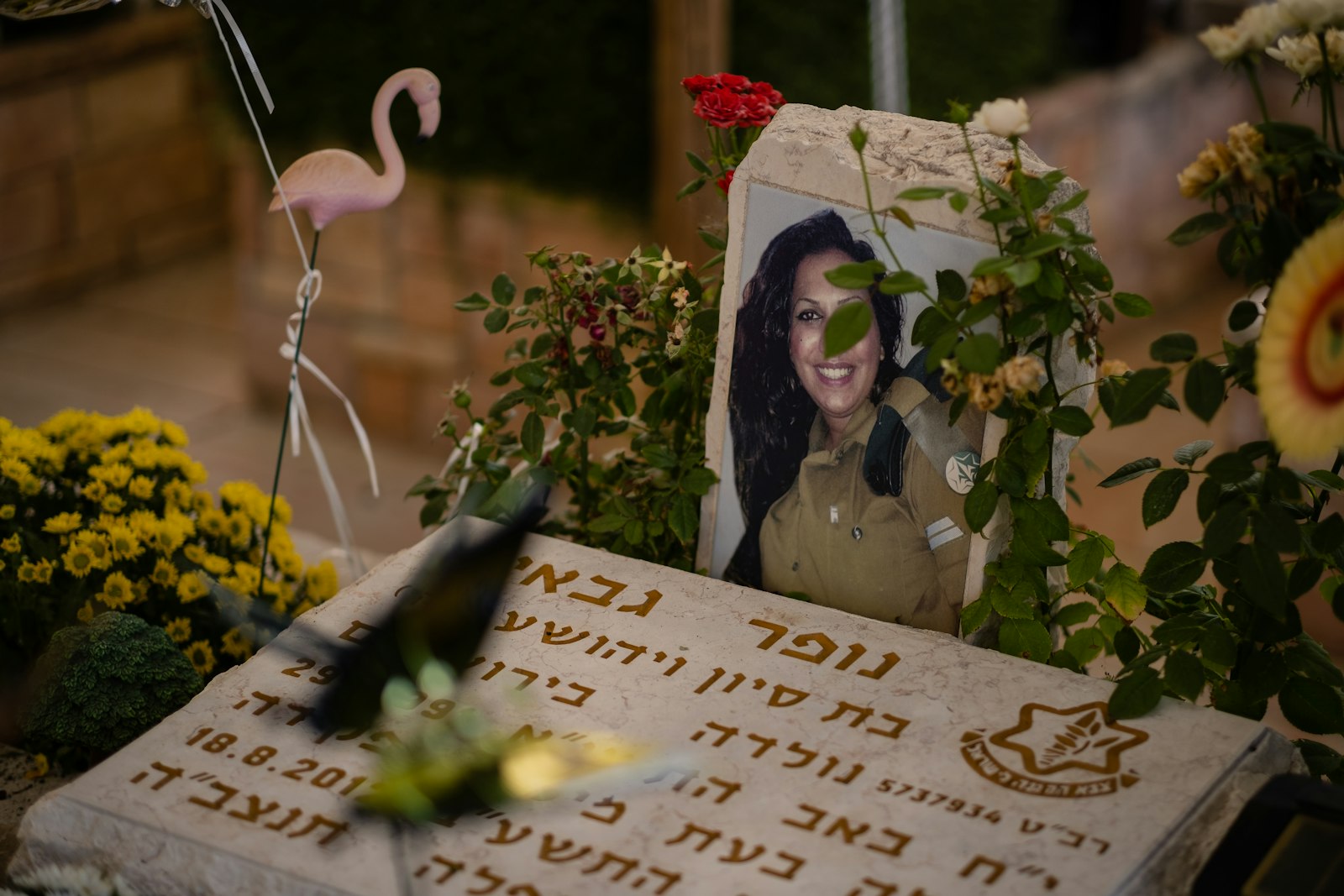
Jewish Eulogy for a Wife: Writing a Hesped That Honors Her
You built a life with her. You shared a bed, a kitchen, holidays, worries about the kids, the small jokes no one else would understand. Now a rabbi has asked who will speak, and the room is waiting, and you are supposed to find words. A Jewish eulogy for a wife — a hesped — is not a speech you perform. It is the last act of love you can offer her in front of the community you built together.
This guide walks you through what Jewish tradition asks of a hesped, how to gather the memories that matter most, and how to say them in a way that is true to her. You will find structure, sample passages, Hebrew phrases, and permission to grieve honestly while you speak.
What a Hesped Is Meant to Do
In Jewish tradition, the hesped has two jobs. Honor the person who died, and help the mourners cry. The Talmud (Sanhedrin 46b) treats it as a communal responsibility, not a decorative one. It is meant to be real.
Here's the thing: the goal is not eloquence. The goal is truth. If she was the steady one, say that. If she was the funny one, say that. The hesped that moves people is the one that sounds like her.
Kavod Ha-Met and the Honesty Principle
Kavod ha-met — honor for the deceased — governs everything. But honor in Jewish law has a specific meaning. You may exaggerate slightly. You may not invent. If she was patient, you can call her the most patient woman you knew. If she was not patient, find a different virtue. She had plenty.
That principle protects you. It means you do not have to turn her into a stained-glass saint. You only have to tell the truth about the woman you loved.
Where the Hesped Fits in the Funeral
Jewish funerals move quickly — burial usually happens within a day when it can. The hesped typically comes after opening psalms and before El Maleh Rachamim, the memorial prayer. In some communities a rabbi speaks; in others, family members do; often, both. If several of you are speaking, coordinate so you are not telling the same story.
How to Start Writing When You Cannot Think
The blank page is the worst part. You do not need a thesis. You need specific memories and the patience to sit with them long enough to find the ones that matter.
Open a notebook. Answer these in short sentences, without editing:
- What did she call me when no one else was around?
- What is one thing she said that I still hear in her voice?
- What did she do for our children that I could not have done?
- What was she like on an ordinary Tuesday night?
- What did she believe in that I sometimes argued with?
You might be surprised what comes up. The material is already in you — writing the hesped is mostly the work of translation.
Asking the Family What They Remember
Call your children, her siblings, her closest friends. Ask each person for one story. Not a eulogy. A story. You will hear things you did not know: the quiet tzedakah she gave, the friend she drove to chemo every Thursday for a year, the argument with her mother that ended in laughter.
Pick two or three stories that reveal something essential about her. You do not need ten.
Structuring a Hesped for Your Wife
Most hespedim follow a loose three-part shape. You do not have to stick to it, but it gives you a rail to hold when grief blurs the page.
- Open with a moment — a specific scene, a line she said, a small image that tells the room who she was.
- Build out her character — two or three qualities, each anchored to a concrete story.
- Close with what she leaves behind — in you, in the children, in the community. End with a Hebrew blessing if it feels right.
The Opening: Start With a Scene
Do not start with "We are here today to honor..." Start with her. Start with the kitchen at 6 a.m. with the coffee on. Start with the way she laughed at her own jokes before she finished them. Start with the Shabbat table she set every week for thirty-four years.
A strong opening is specific enough that someone who never met her can picture her.
"The first thing Miriam did every morning was open the window over the kitchen sink, no matter the weather. She said the house needed air before the day started. For thirty-two years I tried to convince her that February in Chicago did not need air. She never agreed, and I never won, and I would give anything to lose that argument one more time."
The Middle: Qualities Anchored in Stories
Do not list adjectives. Tell a story that shows the quality. "She was generous" is a claim. The story of the check she wrote to the neighbor who lost her job, handed over in an envelope so no one would feel small — that is generosity.
Two or three qualities is plenty. Pick the ones only she had in the particular way she had them.
"Rachel was kind the way other people are athletic — she trained at it, without thinking. When my mother was dying, Rachel drove the hour to her apartment every Sunday for two years and rearranged her cabinets, not because they needed rearranging, but because my mother liked to have her hands busy. That was the whole shape of her love. She showed up. She found a thing to do. She stayed."
The Close: What She Leaves in the World
End with what she is leaving behind. In the children. In you. In the people she loved. In the traditions she kept. The hesped is not only backward-looking — it is a promise to the room that her life is not finished because her life is not contained in her body.
"Our daughter bakes challah every Friday now. She does not use a recipe because Sara never used a recipe. She taught her the way women in our family have always taught each other — with her hands, in the kitchen, not explaining. Sara is gone and Sara is also in that bread every week. May her memory be a blessing — zichronah livracha."
Hebrew Phrases and Jewish Language to Include
Use Hebrew where it belongs, not where it decorates. A forced phrase is worse than no phrase.
- Zichronah livracha — "May her memory be a blessing." The standard closing for a woman.
- Tehi nishmatah tzerurah bitzror hachayim — "May her soul be bound up in the bond of life." A traditional closing, often said over the grave.
- Aleha ha-shalom — "Peace be upon her." Said after her name in conversation.
- Baruch dayan ha-emet — "Blessed is the true judge." Said upon hearing of a death.
If she was an eshet chayil — a woman of valor — you may quote from Proverbs 31. Pick one or two lines that describe her specifically, not the whole passage. The line "she opens her mouth with wisdom, and the teaching of kindness is on her tongue" (31:26) is a strong fit for many women. Tie it to a real moment when she did exactly that.
What to Avoid in a Jewish Eulogy for a Wife
A few things to keep out of the hesped:
- Invented virtues. Jewish law is specific — do not claim things that were not true.
- Long lists. Three stories well told beats ten mentioned in passing.
- Comparisons to other women. She was not a better or worse wife than anyone. She was herself.
- Theological explanations of her death. This is not the moment to explain why. The family is grieving, not searching for doctrine.
- The word "passed away" when died is what you mean. Jewish tradition does not soften death. Neither should you.
The good news? You do not have to be a rabbi to get this right. You have to be her husband, or her partner, and you have to tell the truth.
Sample Jewish Eulogy Passages for a Wife
A few example passages to adapt. Change the names, keep the shape.
Opening Passage
"Dina wore the same wedding band for forty-one years, and she took it off exactly twice — once to have it resized after our second child, once the week before she died, because her hands were too thin to hold it. She gave it back to me and said, 'hold this for me.' I am holding it. I am holding everything she gave me. I always will."
Character Passage
"My wife Leah was not a loud woman. She did not take up room in a conversation. But if you were in pain and Leah was in the room, you knew. She would find you. She would sit down next to you. She would not say anything clever. She would just be there, with her hand on your arm, until whatever you were carrying felt a little lighter. The Talmud says the world rests on the shoulders of thirty-six righteous people whose names no one knows. I spent thirty-eight years married to one of them."
Closing Passage
"Our grandchildren will grow up hearing about Naomi. They will know that she made the best brisket in three zip codes. They will know that she cried at every wedding, including the ones on television. They will know that she loved their grandfather with a ferocity that embarrassed us both sometimes. They will know her the way we knew her — a little at a time, in stories, across the Shabbat table. Tehi nishmatah tzerurah bitzror hachayim. May her soul be bound up in the bond of life."
Delivering the Hesped
A few practical notes for the day itself.
- Write it out in full. Do not trust yourself to improvise. Grief will ambush you.
- Print it in a large font. Double-spaced. Your eyes will not focus the way they usually do.
- Mark the breaths. Draw a slash where you will need to pause. Your body will forget how to breathe under stress.
- Accept that you may cry. Crying is not a failure. The room is already crying. You are allowed to be among them.
- Have a backup. Ask your son, your daughter, or your rabbi to stand ready to finish reading if you cannot. There is no shame in that. The words matter more than who says them.
Frequently Asked Questions
How long should a Jewish eulogy for a wife be?
Most hespedim run five to ten minutes, which is roughly 700 to 1,200 words. Ask the rabbi for a target. A shorter, honest tribute lands harder than a long one, and you are speaking under grief — give yourself room to breathe.
Can a husband deliver the hesped for his own wife?
Yes. Many husbands do. Some find it too hard and ask a son, a rabbi, or a close friend to read words they have written. Either choice is honorable. Write what you want said, then decide who says it.
Is it appropriate to quote Eshet Chayil at a wife's funeral?
It is a traditional and beloved choice. Selecting one or two lines that describe her specifically — her strength, her kindness, her laugh — is more powerful than reading all twenty-two verses. Tie the verse to a real memory of her.
Should I mention her illness or cause of death?
Only if it was part of who she was at the end — the courage she showed, the way she cared for others while she was sick. Otherwise, keep the focus on her life. The funeral is for her whole story, not just its last chapter.
What Hebrew phrases belong in a hesped for a wife?
Close with zichronah livracha (may her memory be a blessing) or tehi nishmatah tzerurah bitzror hachayim (may her soul be bound up in the bond of life). Use them if they feel natural. A forced Hebrew phrase sounds worse than none at all.
Related Reading
If you'd like more help, these may be useful:
You don't have to write this alone.
Answer a few simple questions about your loved one, and we'll craft a personalized eulogy that sounds like it came from you.
Start My Eulogy