

Mexican Funeral Traditions and Eulogy Guide
If you've lost someone with Mexican roots, or you're attending a Mexican funeral for the first time, you're stepping into a tradition that treats death with both deep reverence and unusual warmth. Mexican funeral traditions blend Roman Catholic liturgy, pre-Columbian customs, and a very particular cultural instinct: that the dead are not gone, just moved — and that family is the proper place to grieve them.
This guide walks through what happens at a Mexican funeral, from the velorio to the novenario to the final year of mourning. It covers what to wear, what to bring, and how to write a eulogy that honors both the person and the tradition.
What Is a Velorio?
A velorio is a wake or vigil, usually held the night before the burial. Family and friends gather at the funeral home or the family's home around an open casket ringed with candles and flowers. The family leads the rosary, food and coffee are served for hours, and stories are told. In traditional families, relatives stay with the body until dawn.
The Shape of a Mexican Funeral
Most Mexican funerals follow a Catholic sequence, layered with customs that extend well past the burial. The core stages:
- Velorio — the wake or vigil, held the night before the funeral, usually at a funeral home or the family's home
- Misa de cuerpo presente — the funeral Mass, with the body present in the church
- Entierro — the burial, with graveside prayers and the committal
- Novenario — nine nights of rosary prayers held at the family home after the burial
- Cabo de año — the one-year anniversary Mass, closing the formal mourning period
The funeral itself is one event. The mourning is a year-long practice. That's important to understand, especially for non-Mexican visitors who may expect the whole process to end with the burial.
The Velorio: The Wake
The velorio is one of the most important Mexican funeral customs. Held the night before the funeral Mass, it's typically an all-night or late-night gathering at the funeral home or the family's home. The casket is usually open, surrounded by candles, flowers (especially white lilies and marigolds), and a crucifix.
Here's what happens at a velorio:
- Mourners arrive throughout the evening to pay respects
- The family leads a recitation of the rosary — five decades of Hail Marys and the Apostles' Creed
- Food and coffee are served continuously, often by neighbours and extended family
- Stories are shared, sometimes quietly, sometimes with laughter
- A priest may arrive to lead a brief prayer service
The vigil can run until dawn. In traditional families, immediate relatives stay with the body throughout the night. The idea is that the deceased should not be alone as they transition.
What to Bring and What to Wear
Showing up empty-handed is unusual. Common offerings:
- Food: tamales, pan dulce, coffee, mole, arroz con leche, sandwiches — anything that helps feed the steady stream of mourners
- Flowers: white roses, lilies, or marigolds (especially around Día de los Muertos)
- Cash in a sympathy card: $20 to $100 for friends, more for close relatives. Helps with funeral costs, which can be substantial.
- Mass cards: cards indicating that a Mass will be offered for the deceased's soul — available at most Catholic parishes
On dress:
- Men: dark suit, white shirt, dark tie. Black is preferred for the Mass and burial.
- Women: black or dark dress, or dark skirt and blouse. Older women often wear a black headscarf or mantilla for the Mass.
- Family members may wear all black for the full nine days of novenario, and widows sometimes continue for a year.
The Funeral Mass
The Misa de cuerpo presente is a full Catholic Requiem Mass. It typically runs 45 minutes to an hour and includes:
- Scripture readings, usually in Spanish
- A homily by the priest focused on resurrection and hope
- Hymns in Spanish — Amazing Grace (Sublime Gracia), Pescador de Hombres, and Resucitó are common
- The sprinkling of holy water and incensing of the coffin
- Communion for the faithful
A family eulogy at the Mass itself is traditionally less common than in Protestant American funerals — the priest's homily serves that function. But it's increasingly included, especially for children and grandchildren who want to speak personally. Ask the priest in advance; most will allow 3-5 minutes before or after the homily.
The Burial
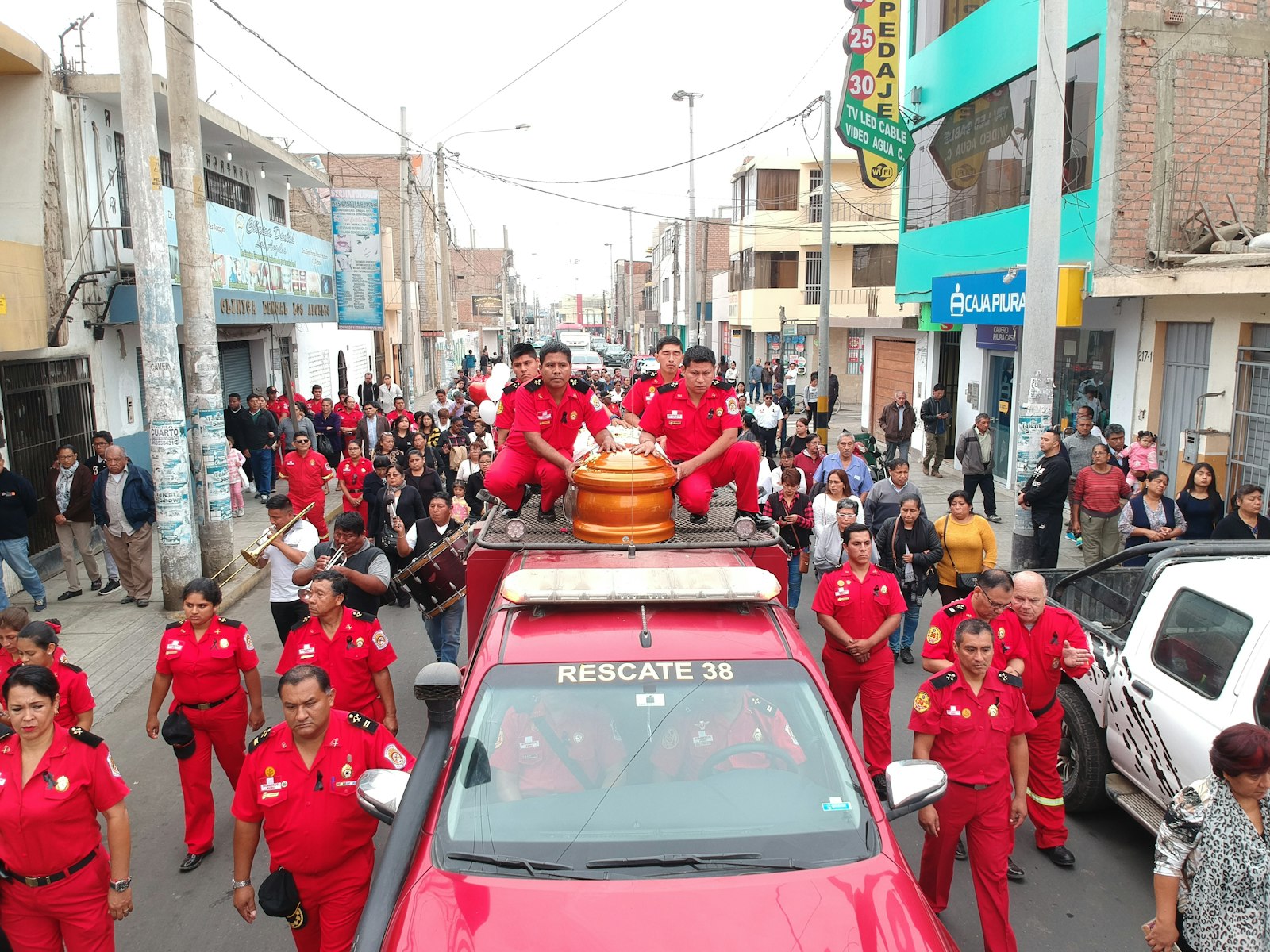
After the Mass, a procession follows the hearse to the cemetery. The graveside rites are brief but meaningful:
- Final prayers and scripture readings led by the priest
- The blessing of the grave with holy water
- The lowering of the coffin
- Family members throwing a handful of earth or a single flower into the grave
In some Mexican communities, especially in rural areas or among older families, mourners may sing Las Mañanitas at the graveside — the traditional Mexican birthday song, sung here as a farewell rather than a celebration. It sounds strange to outsiders, and it hits harder than you'd expect.
The Novenario: Nine Nights of Prayer
One of the most distinctive Mexican funeral practices is the novenario, nine nights of rosary prayers held at the family home beginning the day of the burial.
Here's how it works:
- Each evening at roughly the same time (often 7 or 8 PM), family and close friends gather at the home
- A designated leader, often a grandmother or an elder, leads the rosary
- Prayers last 30 to 45 minutes
- Coffee, pan dulce, tamales, or a light meal follows each night
- On the ninth and final night, a more elaborate gathering — sometimes with a priest — closes the novenario
The novenario is where much of the real grieving happens. Stories come out. Photos get passed around. People who couldn't say anything at the funeral finally find words. If you're invited, attend at least one night.
Mexican Eulogy Traditions
Mexican eulogy traditions have been shaped more by Catholic practice than by the Anglo-American funeral sermon. Historically, the priest's homily was the main spoken tribute, with personal remarks saved for the velorio or the novenario rather than the Mass.
That's shifted in recent decades, especially among Mexican-American families and in urban Mexican communities. Today you'll often find a short eulogy from a child, grandchild, or close friend at one of three points:
- At the velorio, informally, during the sharing of stories
- At the Mass, formally, 3-5 minutes before or after the priest's homily
- At the novenario, especially on the ninth night, when a fuller tribute is natural
What to Include
A Mexican-style eulogy tends to emphasize:
- Family first — their role as parent, grandparent, spouse, or sibling
- Faith — how they lived their Catholicism (or their broader spirituality)
- Sacrifice and work — especially for immigrant families, the journey and the labour that built the next generation's life
- Character through specifics — the food they cooked, the stories they told, the way they treated strangers
- Gratitude — spoken to the deceased directly, often in Spanish
Sample Opening
"Mi abuela was born in a small town outside Guanajuato in 1937. She was one of eleven children. She left school at nine years old to help her mother in the kitchen, and she never stopped cooking for another person's table for the rest of her life. She crossed the border in 1966 with my grandfather and three children under the age of five. She spoke no English. She worked in a tomato field, a laundry, and a restaurant, sometimes all three in the same week. She raised seven children in this country and lived to see twenty-two grandchildren. And every single one of us knew what it meant to be fed by her."
Sample Middle Passage
"Mi papá was not a man who said 'I love you.' Mi papá changed the oil in my first car without asking. He drove two hours to fix my sister's water heater when he was already sick. He sent money home to his mother every month for forty years and never once mentioned it. That was his language. If he showed up with his tools, that was love. If he brought you a plate of carnitas, that was love. If he sat next to you in silence on the porch, that was love too."
Sample Closing
"Abuela, gracias. Grandmother, thank you. Thank you for every tortilla. Thank you for every night you stayed up praying for us. Thank you for crossing that border and building this family. Que Dios te tenga en su gloria. May God hold you in his glory. Descansa, abuela. Rest now."
Closing in Spanish matters, especially for bilingual families. If you're not a fluent speaker, practice the phrases with a family member beforehand.
Common Spanish Phrases for Condolence
Phrases to know when offering sympathy:
- Mi más sentido pésame — "My deepest sympathy." The most common formal phrase.
- Lo siento mucho por tu pérdida — "I am so sorry for your loss."
- Que en paz descanse (Q.E.P.D.) — "May he/she rest in peace." Often inscribed on memorial cards.
- Que Dios lo tenga en su gloria — "May God hold him in his glory."
- Te acompaño en tu sentimiento — "I share in your feelings." Used in more intimate settings.
Día de los Muertos vs the Funeral
Non-Mexican visitors sometimes confuse Día de los Muertos (November 1-2) with the funeral itself. They're not the same thing. Day of the Dead is an annual celebration where families honor deceased relatives with home altars (ofrendas), marigolds, sugar skulls, and offerings of the deceased's favourite food and drink.
It's a joyful remembrance, not a grieving ritual. It comes years after the funeral. And it keeps the deceased alive in family memory rather than treating them as gone.
Many Mexican families will set up an ofrenda for the deceased during the first Day of the Dead after their death. That gathering often feels like a second, softer wake — a year later, with tears and laughter both.
Common Mistakes to Avoid
- Don't refuse food at the velorio or novenario. Eating with the family is part of mourning.
- Don't rush the rosary. It's central to the ritual, and the full five decades matter.
- Don't treat the open casket as awkward. If the casket is open, approach it, spend a moment, pray or simply reflect, and step back.
- Don't expect the mourning to end at the burial. The family is in active mourning for at least nine more days, often a full year.
- Don't bring only flowers. Food is more traditional and more useful to a family hosting dozens of mourners for days.
Frequently Asked Questions
What is a velorio?
A velorio is the Mexican wake or vigil, held the night before the funeral Mass. Family and friends gather around the open casket to pray the rosary, share food, and remember the deceased through the night.
How long is the mourning period in Mexican tradition?
The traditional mourning period, called luto, lasts for nine days of prayer (the novenario) after death, followed by a full year of mourning for close family. Many families also mark the one-year anniversary with a memorial Mass.
Do Mexicans bring food to funerals?
Yes. Bringing food to the grieving family is a core part of Mexican funeral customs. Tamales, pan dulce, coffee, mole, and arroz con leche are common offerings delivered to the home or the velorio.
What is the novenario?
The novenario is the nine days of rosary prayers held after a death. Family and friends gather each evening at the home to pray for the deceased's soul. The final night, the novena, often includes a meal and a small ceremony.
Is Day of the Dead part of Mexican funeral traditions?
Day of the Dead (Día de los Muertos) is a separate annual observance, not a funeral rite. Families honor deceased loved ones each November 1-2 with altars, marigolds, and offerings — but it follows the funeral rather than replacing it.
Related Reading
If you'd like more help, these may be useful:
You don't have to write this alone.
Answer a few simple questions about your loved one, and we'll craft a personalized eulogy that sounds like it came from you.
Start My Eulogy