

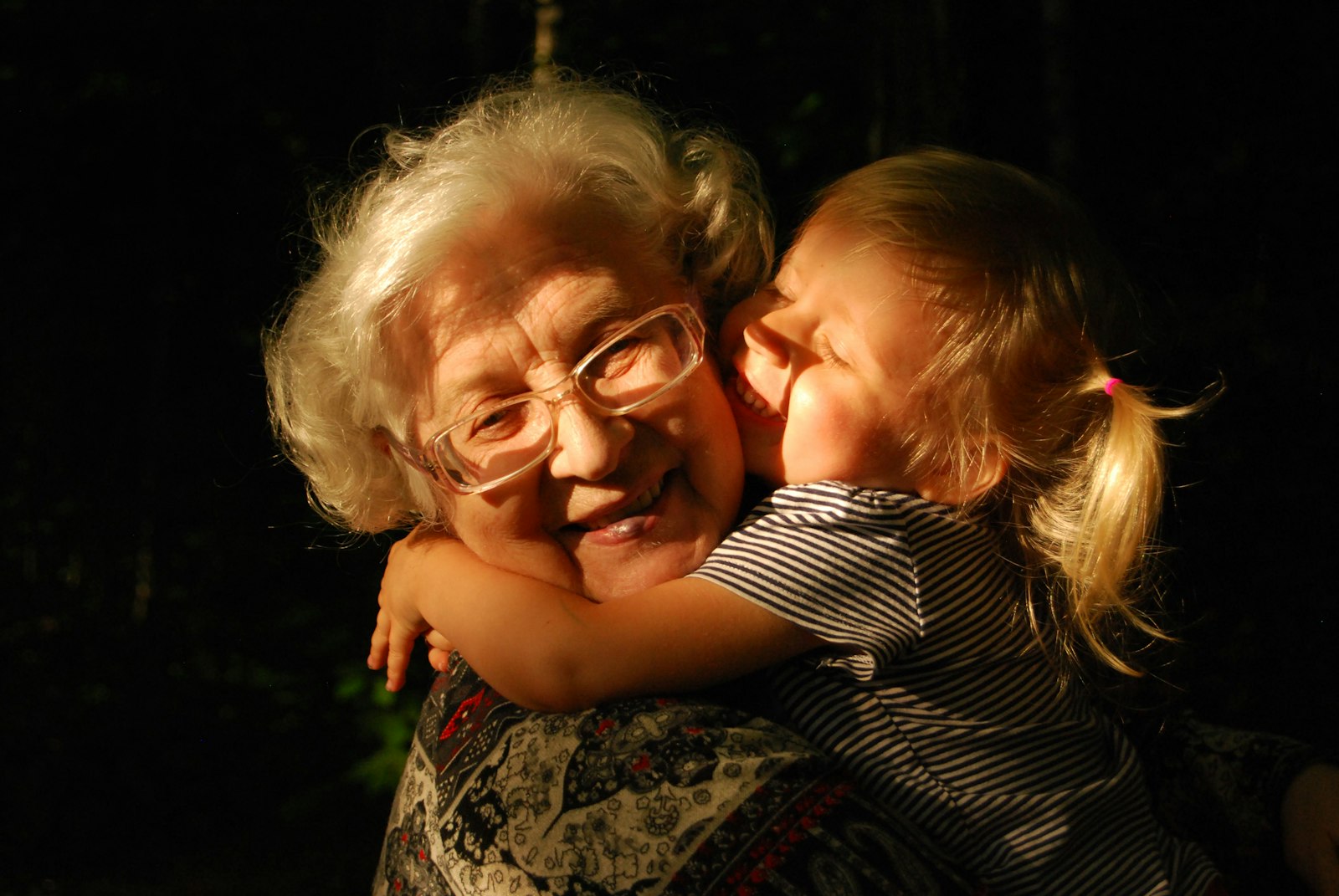
When the service is formal and the room is large, a professional eulogy for a grandmother gives you a steady way through the hardest ten minutes of the day. It's composed without being cold, structured without being stiff, and personal without spilling over.
This guide gives you a four-part structure, sample passages by theme, and delivery advice. You'll leave with something you can actually stand up and read.
What Professional Tone Means Here
Professional doesn't mean emotionless. It means measured. You're writing a remembrance that would read well in print — clear, specific, restrained. The feeling is there, but it's carried by the details, not by the delivery.
A professional eulogy for a grandmother has three qualities:
- Composed voice. Steady pace, steady volume, steady eye contact if you can manage it.
- Visible structure. Listeners can follow the shape.
- Selective content. You don't attempt to sum up her life. You choose what matters most.
Here's the thing: a long life does not require a long speech. The opposite, usually. The longer the life, the more brutal the editing needs to be.
When This Tone Is the Right Choice
A professional register fits when:
- The service is formal — a large church, a traditional funeral home, a memorial at an institution.
- She had a public life — a career, a volunteer role, a long-standing community presence.
- The family is large and the audience is mixed, including people who knew her in different contexts.
- You personally do better reading a script than speaking off the cuff.
If the gathering is small and family-only, a warmer register often fits better. Professional tone is a specific tool for specific rooms.
The Four-Part Structure
Use this shape. It works reliably.
- Opening. Introduce yourself. Your relationship. A brief line about why you're here.
- Who she was. Two or three defining qualities, each shown with a concrete example.
- What she built. Her family, her work, her community — the legacy.
- Closing. A single line she lived by, or a single image, then the farewell.
Length: 700 to 1,000 words. Delivery time: five to seven minutes.
Why Four Parts and Not Five
Five sections is where professional tone starts to sag. You lose the listener. You repeat yourself. Four is enough to tell the story without fraying it.
Writing Each Section
Let me walk through each part with a sample you can adapt.
The Opening: Quick and Clean
Identify yourself. State what you're doing. Do not open with a dictionary definition, a song lyric, or a thank-you to the clergy.
"For those I haven't met, my name is Rachel. I'm Eleanor's oldest granddaughter. On behalf of the family, thank you for being here. My grandmother would have noticed every one of you, by name, and remembered exactly how she knew you. I will try to honor that attention today."
Sixty seconds, maximum. Then move to her.
Who She Was: Qualities Backed by Evidence
Pick two or three traits. Under each, give a concrete example. Abstract praise slides off the room. Specifics stay.
"My grandmother was precise. Her recipe cards were written in the same handwriting for sixty years. Her Christmas list had a column for what she gave, a column for what she received, and a column for thank-you notes sent. She was not cold — she was careful. She believed attention to detail was how you told people they mattered."
Notice the structure: name the trait, give three brief specifics, then a sentence that places the trait in a larger frame. That pattern works every time.
What She Built: Her Legacy in Context
Shift to legacy. Locate her in her work, her family, her community.
"She raised four children in a house without central heating for the first ten years. She went back to nursing when her youngest started kindergarten and worked night shifts for twenty-two years. She delivered meals to shut-ins every Wednesday from 1978 until last spring. If you want to know what she left behind, look around this room. A lot of the people here are here because she showed up for them."
Keep it factual. The composure comes from letting the facts do the work.
The Closing: Small, Specific, Final
End on something small. Don't try to sum up ninety years. Pick one line or image.
"She used to say that the point of a long life was to be useful to the people in it. She was useful to all of us, right up to the end. We will miss her cooking, her lists, her quiet way of fixing things before anyone asked. Thank you, Grandma. We were lucky to be yours."
Three sentences. One image. A clean exit.
Sample Passages by Theme
Here are passages for common themes. Adapt the specifics.
The matriarch
"She held the family together the way some people hold a job. Birthdays were remembered. Holidays had assigned seats. If two cousins hadn't spoken in a year, she would find a reason to put them at the same table. We didn't always see it as love at the time. We see it now. The table she set is still the table we sit at."
The working grandmother
"She worked at the bank on Elm Street for forty-one years. She could count a stack of bills faster than the machines that eventually replaced her. She knew the name of every customer's child. She took a full lunch hour, every day, which she spent walking — not eating, walking. She lived to be eighty-nine. The walking, she said, was the reason."
The quiet grandmother
"My grandmother was not a storyteller. She was a listener. You could sit at her kitchen table for an hour and say everything you'd been holding in, and she would pour more coffee and ask one good question. That was her form of presence. Not many people have it. Fewer still practice it for sixty years."
The grandmother who raised you
"She raised me for a stretch of years when my own parents couldn't. She did not make a show of it. She packed my lunches, checked my homework, and sat in the stands at every single game. She is the reason I turned out at all. There is no speech long enough to pay that back. This one is a start."
Delivery: Composure Is a Practice
The most common mistake in a professional eulogy is over-correcting into flatness. You don't want a monotone. You want considered, steady, human.
Here's how to get there:
- Read from a full script. Not bullet points. Print double-spaced, 14-point type.
- Mark your pauses. One slash (/) for a short pause, two (//) for a longer one.
- Rehearse four times out loud. Standing up, at speaking pace. Not in your head.
- Slow down 20 percent. Nerves speed you up. Pre-correct.
- Bring water. Drink before, not during. Mid-speech sips break the rhythm.
If your voice breaks — and it might — pause. Breathe in, breathe out, continue. A pause reads as composure. An apology reads as panic.
What to Cut
The first draft is always too long. Cut these:
- Long lists of clubs, hobbies, and honors. Pick the two that mattered most.
- Generic lines ("she had such a warm heart," "she lit up every room"). Replace with a specific moment.
- In-jokes only three people will understand. Save them for the reception.
- Any sentence containing "words cannot capture." If they cannot, don't try.
- Apologies about your composure or lack of skill. Just read.
Read the draft out loud. Anything that makes you stumble — cut or rewrite. One hard edit is usually the difference between a sprawl and a speech.
Frequently Asked Questions
What makes a eulogy sound professional?
A professional eulogy is composed in tone, clear in structure, and selective in content. The emotion sits in the specifics rather than in the volume of the delivery. It sounds like a well-written remembrance you could read at a formal service.
Is a professional tone appropriate for a grandmother?
Yes, particularly when the service is formal, the family is large, or she was a public figure in her community. It's also the right choice if you personally do better with a tight script than with improvisation. Restraint can be its own form of love.
How long should a professional eulogy for a grandmother be?
Five to seven minutes, which is roughly 700 to 1,000 words. A composed tone rewards discipline. Say three or four things clearly and stop before you overreach.
How do I speak about a long life without listing everything?
You don't try to cover everything. Pick two or three threads that defined her — her work, her family, one consistent trait — and develop each with a specific example. A list of facts is not a eulogy. A chosen shape is.
Handling Faith, Culture, and Family Tradition
A professional eulogy for a grandmother often lands in a service with specific religious or cultural expectations. A Catholic funeral Mass has a different shape than a Jewish shiva, which has a different shape than a humanist memorial. The composed register works in all of them, but the content around it needs to fit the room.
Ask the officiant what's customary before you write. A five-minute call answers most of it: Is a eulogy part of the service or after it? Are scripture readings expected inside the remembrance or handled separately? Is there a preferred way to refer to the deceased — full name, married name, maiden name? In some traditions the speech is brief and factual by design, with the emotional weight carried by prayer. In others the family speaker is expected to do most of the work.
If faith was central to her life, say so plainly, once, and let it sit. "My grandmother's faith was the frame she built her life on" is stronger than three paragraphs of scripture quotations. If faith was not central, don't borrow it for the occasion — a composed remembrance of a secular grandmother shouldn't suddenly turn religious because the room is.
Cultural traditions matter too. If she was the family's keeper of a specific holiday, a specific recipe, a specific language spoken only at her kitchen table, name it directly. "She was the last person in our family who made the Christmas Eve soup from scratch" is the kind of line that carries a whole culture in one sentence. Specifics over generalities, always.
Related Reading
If you'd like more help, these may be useful:
You don't have to write this alone.
Answer a few simple questions about your loved one, and we'll craft a personalized eulogy that sounds like it came from you.
Start My Eulogy